
Bipolar Disorder

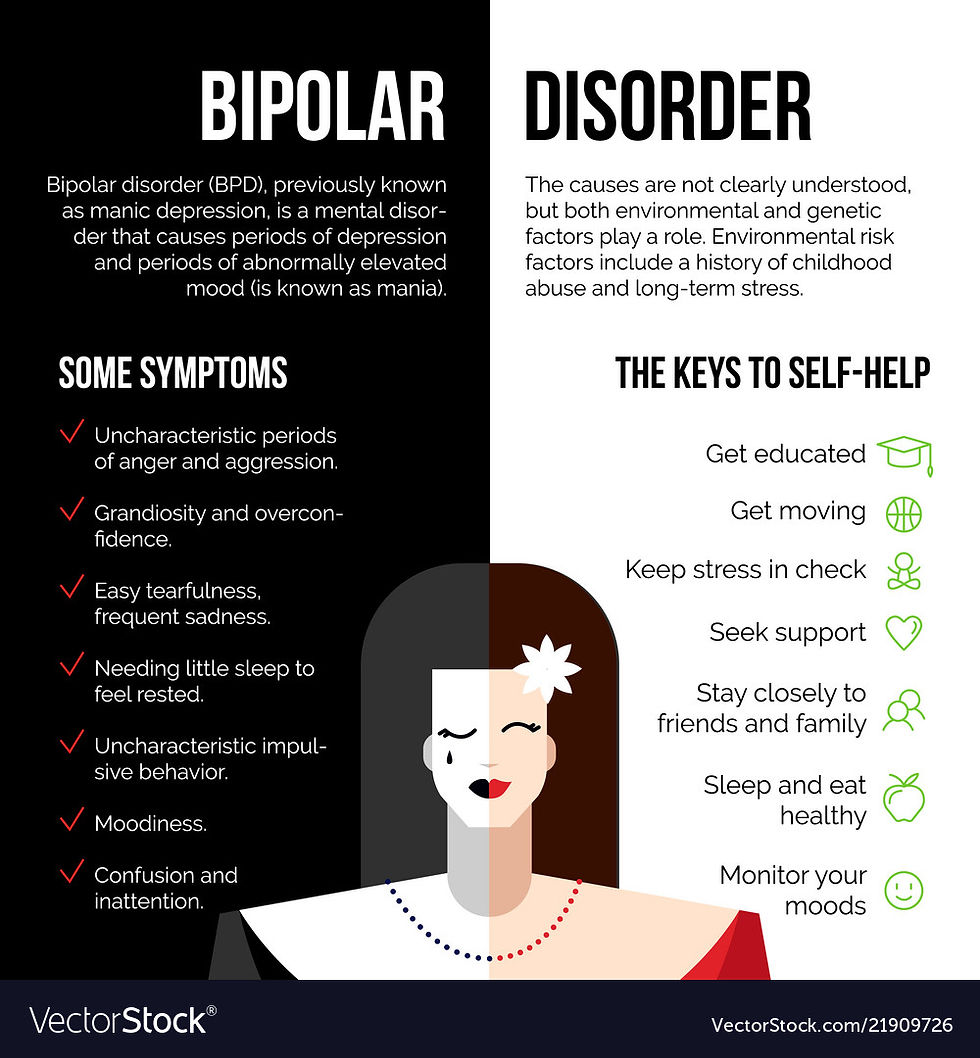
A disorder associated with episodes of mood swings ranging from depressive lows to manic highs.The exact cause of bipolar disorder isn’t known, but a combination of genetics, environment and altered brain structure and chemistry may play a role.
Manic episodes may include symptoms such as high energy, reduced need for sleep and loss of touch with reality.
Depressive episodes may include symptoms such as low energy, low motivation and loss of interest in daily activities. Mood episodes last days to months at a time and may also be associated with suicidal thoughts.Treatment is usually lifelong and often involves a combination of medications and psychotherapy.
Episodes of mood swings may occur rarely or multiple times a year. While most people will experience some emotional symptoms between episodes, some may not experience any.
Although bipolar disorder is a lifelong condition, you can manage your mood swings and other symptoms by following a treatment plan. In most cases, bipolar disorder is treated with medications and psychological counseling (psychotherapy).
There are several types of bipolar and related disorders. They may include mania or hypomania and depression. Symptoms can cause unpredictable changes in mood and behavior, resulting in significant distress and difficulty in life.
Bipolar I disorder. You've had at least one manic episode that may be preceded or followed by hypomanic or major depressive episodes. In some cases, mania may trigger a break from reality (psychosis).
Bipolar II disorder. You've had at least one major depressive episode and at least one hypomanic episode, but you've never had a manic episode.
Cyclothymic disorder. You've had at least two years — or one year in children and teenagers — of many periods of hypomania symptoms and periods of depressive symptoms (though less severe than major depression).
Other types. These include, for example, bipolar and related disorders induced by certain drugs or alcohol or due to a medical condition, such as Cushing's disease, multiple sclerosis or stroke.
Bipolar II disorder is not a milder form of bipolar I disorder, but a separate diagnosis. While the manic episodes of bipolar I disorder can be severe and dangerous, individuals with bipolar II disorder can be depressed for longer periods, which can cause significant impairment.
Although bipolar disorder can occur at any age, typically it's diagnosed in the teenage years or early 20s. Symptoms can vary from person to person, and symptoms may vary over time.
Signs and symptoms of bipolar I and bipolar II disorders may include other features, such as anxious distress, melancholy, psychosis or others. The timing of symptoms may include diagnostic labels such as mixed or rapid cycling. In addition, bipolar symptoms may occur during pregnancy or change with the seasons.
Causes
The exact cause of bipolar disorder is unknown, but several factors may be involved, such as:
Biological differences. People with bipolar disorder appear to have physical changes in their brains. The significance of these changes is still uncertain but may eventually help pinpoint causes.
Genetics. Bipolar disorder is more common in people who have a first-degree relative, such as a sibling or parent, with the condition. Researchers are trying to find genes that may be involved in causing bipolar disorder.
Risk factors
Factors that may increase the risk of developing bipolar disorder or act as a trigger for the first episode include:
Having a first-degree relative, such as a parent or sibling, with bipolar disorder
Periods of high stress, such as the death of a loved one or other traumatic event
Drug or alcohol abuse
Many people with the condition abuse alcohol or other drugs when manic or depressed. People with bipolar disorder are more likely to have seasonal depression, co-existing anxiety disorders, posttraumatic stress disorder, and obsessive-compulsive disorder.
Bipolar Disorder Diagnosis
If you or someone you know has symptoms of bipolar disorder, talk to your family doctor or a psychiatrist. They will ask questions about mental illnesses that you, or the person you're concerned about, have had, and any mental illnesses that run in the family. The person will also get a complete psychiatric evaluation to tell if they have likely bipolar disorder or another mental health condition.
Diagnosing bipolar disorder is all about the person's symptoms and determining whether they may be the result of another cause (such as low thyroid or mood symptoms caused by drug or alcohol abuse). How severe are they? How long have they lasted? How often do they happen?
The most telling symptoms are those that involve highs or lows in mood, along with changes in sleep, energy, thinking, and behavior.
Talking to close friends and family of the person can often help the doctor distinguish bipolar disorder from major depressive disorder or other psychiatric disorders that can involve changes in mood, thinking, and behavior.
Diagnosing bipolar disorder can be trickier for children and teenagers. Their symptoms may be the same as adults but might be confused for attention deficit hyperactivity disorder (ADHD) or even just bad behavior.

Bipolar Disorder Treatments
Bipolar disorder can be treated. It's a long-term condition that needs ongoing care. People who have four or more mood episodes in a year, or who also have drug or alcohol problems, can have forms of the illness that are much harder to treat.
Medication
Medication is the main treatment, usually involving the following:
Mood stabilizers, such as carbamazepine (Tegretol), lamotrigine (Lamictal), lithium, or valproate(Depakote)
Antipsychotic drugs, such as cariprazine (Vraylar), lurasidone (Latuda), olanzapine (Zyprexa), and quetiapine (Seroquel)
Antidepressant-antipsychotic drugs, a combination of an antidepressant and a mood stabilizer
Anti-anxiety medications or sleep medicines, such as sedatives like benzodiazepines
It can take a while to find the right combination for you. You may need to try a few things before you and your doctor figure out what works best. Once you do, it’s important to stay on your medication and talk with your doctor before stopping or changing anything.
Women who are pregnant or breastfeeding should talk with their doctors about medications that are safe to take.
Psychotherapy, or "talk therapy," is often recommended, too. There are several different types. Options can include:
Interpersonal and social rhythm therapy (ISPRT). This is based on the idea that having a daily routine for everything, from sleeping to eating, can help keep your mood stable.
Cognitive behavioral therapy (CBT). This helps you replace bad habits and actions with more positive alternatives. It also can help you learn to manage stress and other negative triggers.
Psychoeducation. Learning more and teaching family members about bipolar disorder can help give you support when episodes happen.
Electroconvulsive therapy (ECT).
Lifestyle changes
Many might be familiar with the word but not the actual diagnosis, and associate it with “being crazy.” Bipolar does not mean you are crazy. It means your mood swings from high to low due to your brain chemistry. Bipolar disorder is a brain-based mood disorder, not a character flaw, or an inability to manage your feelings.
—Dr. Bobbi Wegner


Comments